
What to Do if Your Roof Leaks After a Storm
A roof leak after a storm can turn into stained ceilings, damaged insulation, electrical concerns, mold risk, and more expensive repairs if the problem is allowed to keep taking on water. If the roof started leaking after wind, hail, or heavy rain, the right next step is not guessing. It is protecting the home, documenting what you can, and figuring out where the leak is likely coming from.
This page is for one specific symptom: a roof leak after a storm. If that is what you are dealing with, these are the right first steps.
What to Do First if the Roof Is Leaking
The priorities are simple: stay safe, limit interior damage, and avoid making the situation worse while you wait for the roof to be inspected.
Protect the Inside of the Home
Place buckets or towels under active drips, move furniture and valuables away from the area, and protect flooring where possible.
Watch for Electrical Risk
If water is near light fixtures, outlets, or electrical equipment, treat that seriously and shut off power to the affected area if it can be done safely.
Check the Ceiling Condition
If the ceiling is bulging, sagging, or taking on a lot of water, the risk is bigger than a simple stain. Safety comes first.
Do Not Ignore It Until the Weekend
Post-storm leaks often get worse with the next rain. Fast action helps limit interior damage and improves documentation.
Do Not Climb on the Roof Yourself
One of the worst moves homeowners make is trying to inspect storm damage from the roof while conditions are still wet, slick, windy, or unstable.
You can still gather useful information from the ground, from inside the home, and from the attic if it is safe to access. A leaking roof does not justify taking a fall.
- Wet shingles and storm-damaged roof surfaces can be dangerous
- The visible leak inside may not be directly below the actual roof problem
- Safe documentation is better than risky guesswork
What to Look For
A roof leak does not always drip directly below the damage. Water can travel before it becomes visible inside the home.
Interior Signs
Ceiling stains, active dripping, bubbling paint, wet drywall, damp insulation, or attic moisture that showed up after the storm.
Ground-Level Exterior Signs
Missing shingles, lifted shingles, storm debris, or visible damage that can be seen safely from around the property.
Common Leak-Related Roof Areas
Roof valleys, flashing transitions, vents, chimneys, skylights, ridge areas, pipe boots, and any section where shingles were compromised.
Attic Clues
If it is safe to check the attic, look for wet insulation, dark staining, damp framing, or daylight where it should not be visible.
Temporary Protection May Be Needed
Temporary protection can help reduce additional water intrusion, but it is not the same thing as fixing the roof.
Tarping Can Buy Time
If the roof has an exposed area and more rain is coming, temporary protection may be appropriate until permanent work can be done.
Temporary Measures Are Not the End of the Problem
A tarp helps reduce further damage. It does not explain why the roof leaked or whether repair, broader storm action, or replacement is needed.
Speed Still Matters
Even with temporary protection, the roof should still be inspected promptly so the next step is based on actual findings.
Documentation Still Matters
Take photos of the leak, interior conditions, and any temporary protection used. That record helps later if questions come up.
Why a Proper Leak Inspection Matters
A roof leak is not always obvious from the ground, and the visible stain inside the home is not always directly below the true source. That is why a proper leak inspection often needs more than a quick exterior glance.
In many cases, the best process starts by narrowing down the leak path from inside the home, checking attic conditions, and then focusing roof-level inspection on the areas most closely associated with that leak path. When appropriate, drone-assisted documentation helps inspect upper roof sections and valleys more clearly.
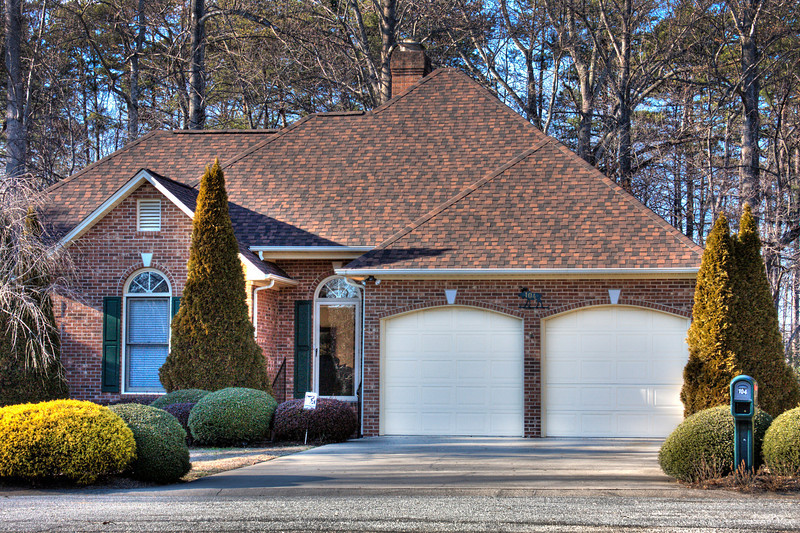
Documented Leak Investigation Example
Your existing page already had good proof content. It is worth keeping, but in a cleaner role that supports the main symptom page.
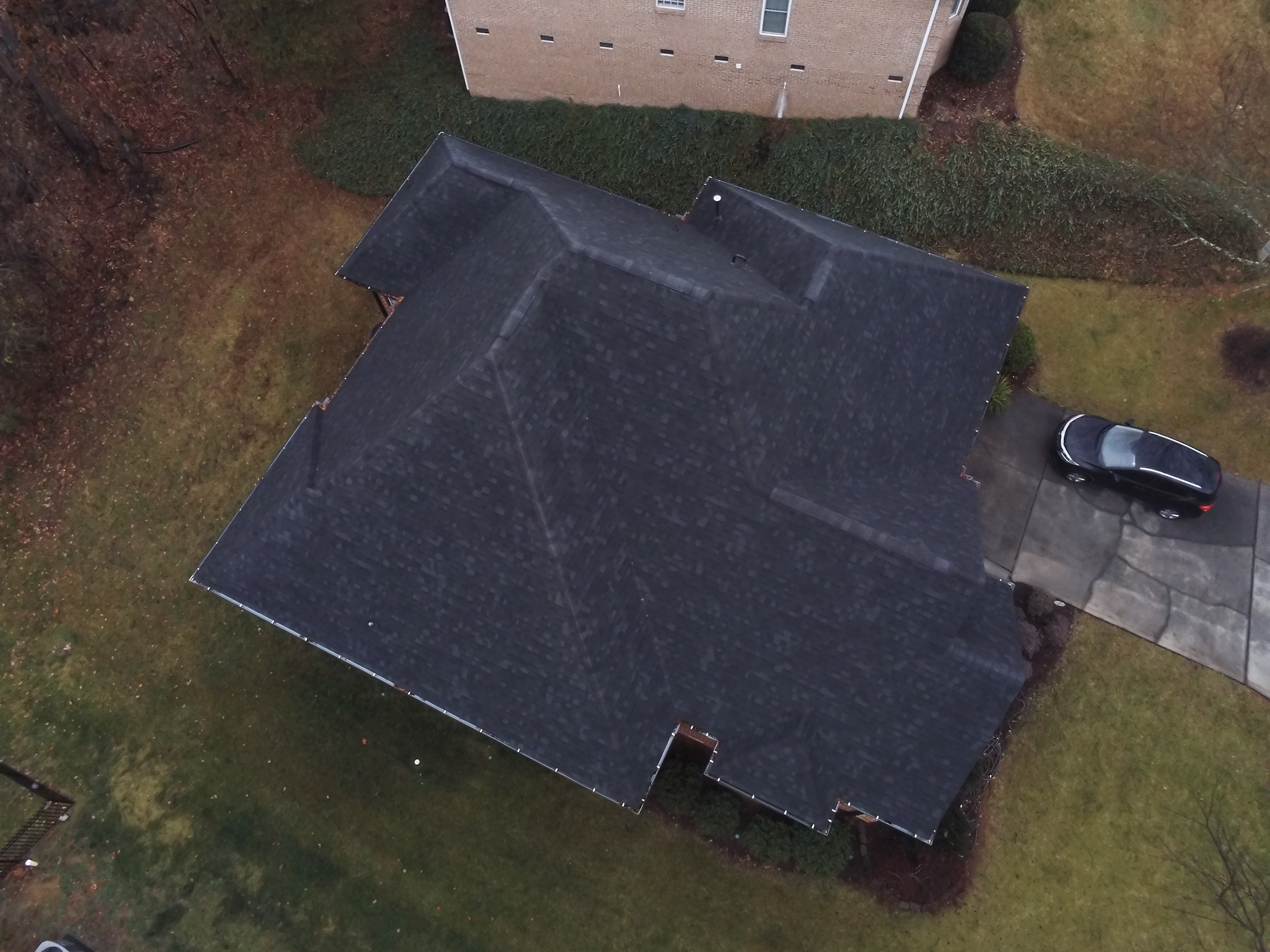
Full roof overview used to evaluate upper roof sections and narrow down the area associated with the likely leak path.
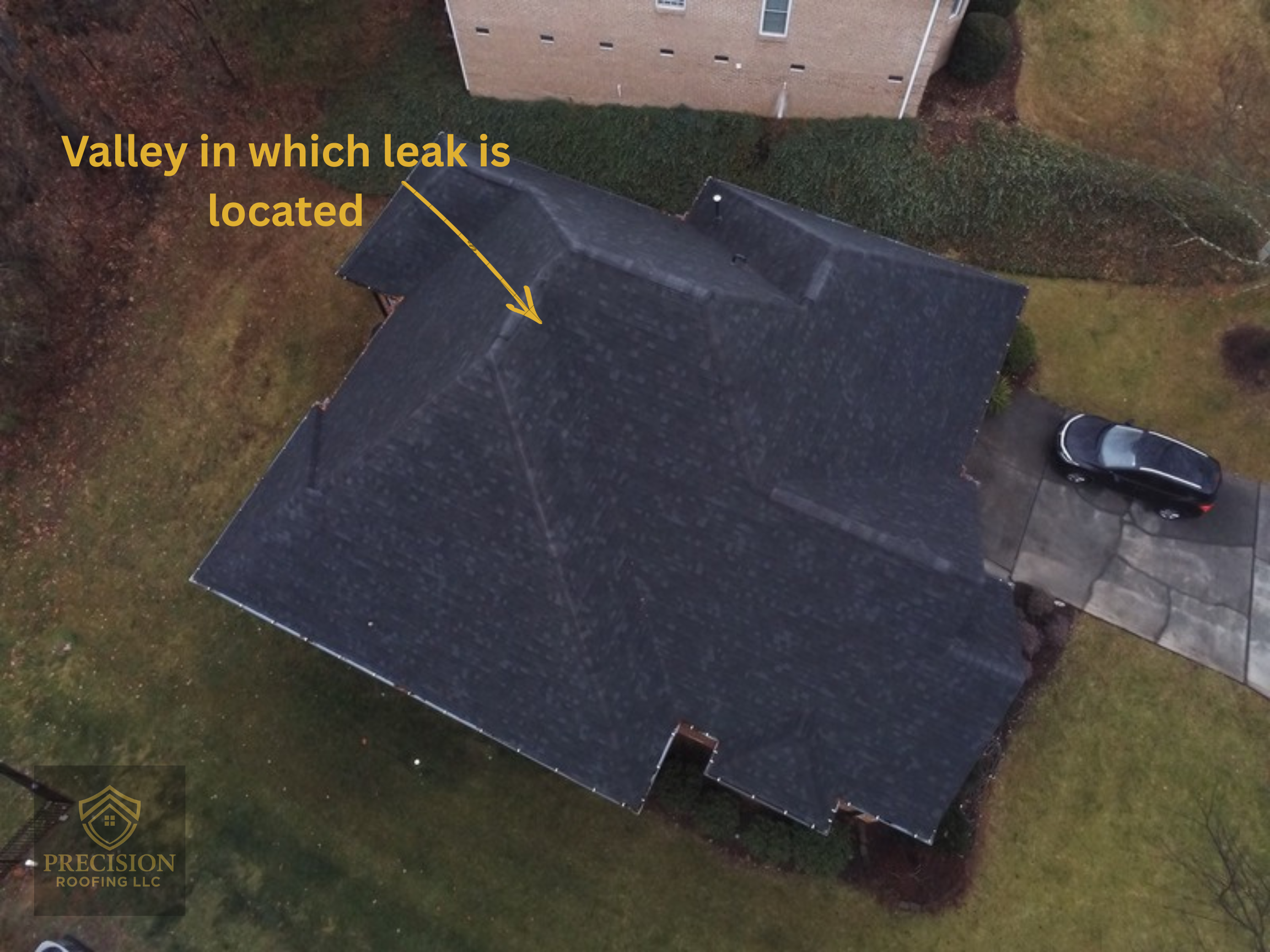
Marked-up inspection documentation showing the roof valley area associated with the likely leak path.
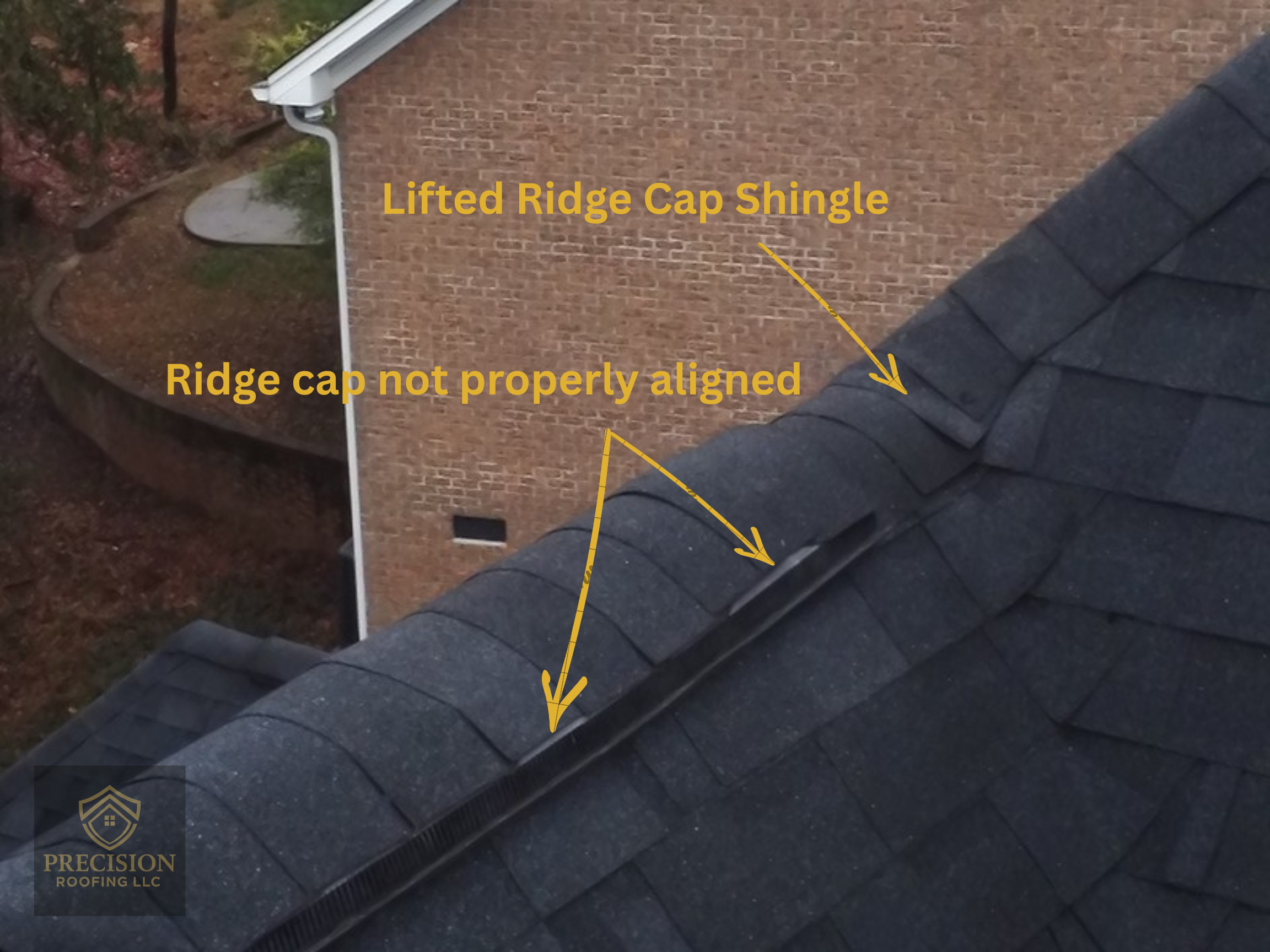
Closer inspection identified roof-level concerns in the affected area that required further evaluation and recommendations.
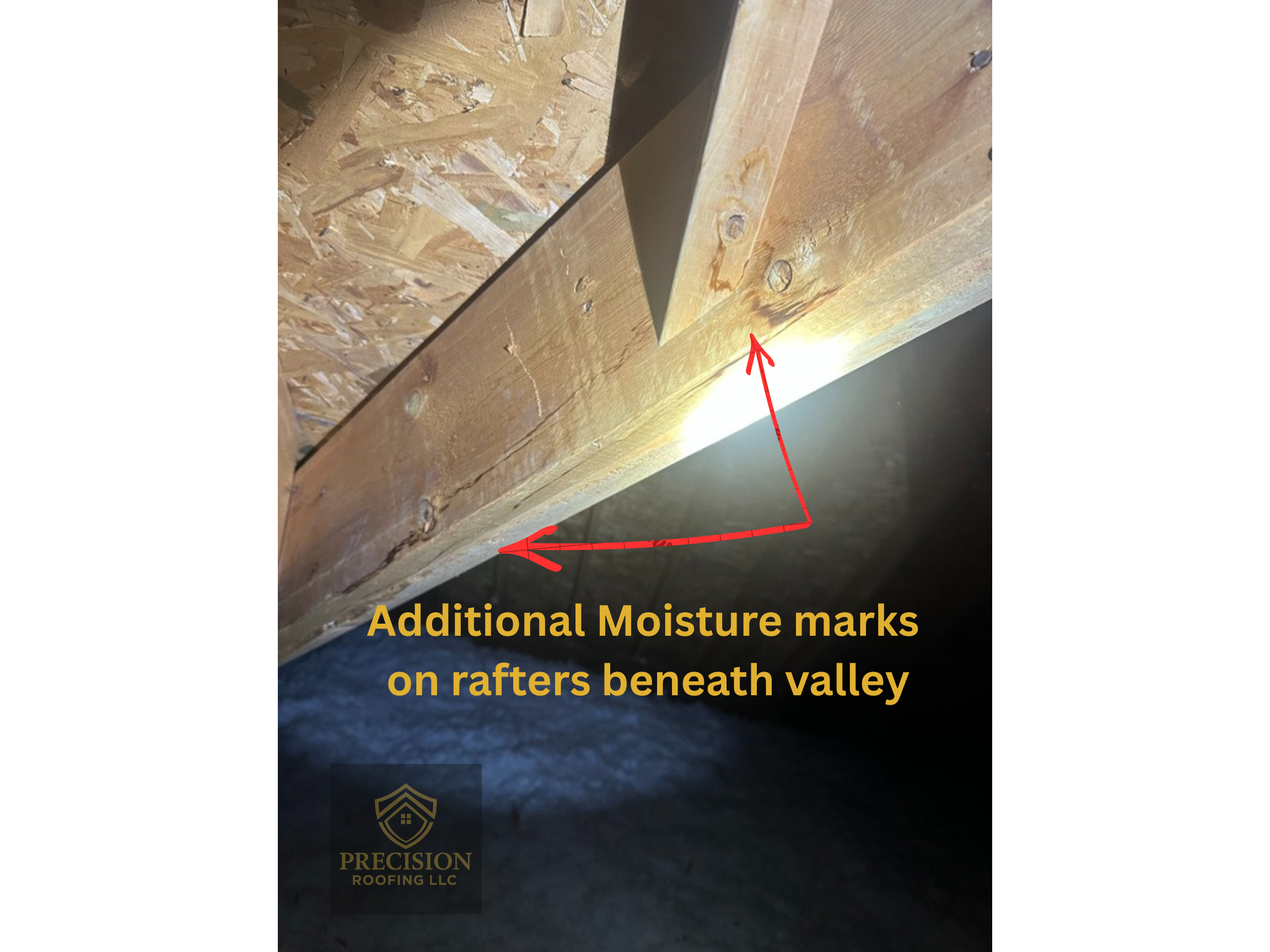
Attic findings helped support the roof-level observations and better explain where the leak path was likely developing.
If your home is showing ceiling stains, active dripping, attic moisture, or signs of storm-related leaking, the best next step is a documented inspection that helps identify the likely source and explain whether repair or broader action makes the most sense.
Request an Inspection Contact UsFrequently Asked Questions
These are some common questions homeowners ask when the roof starts leaking after a storm.
Can one missing shingle cause a roof leak?
Yes. A missing, lifted, or damaged shingle can allow water into the roof system, especially during wind-driven rain.
Should I tarp my roof myself?
Only if it can be done safely. Many homeowners are better off avoiding the risk and letting a professional handle temporary protection.
How soon should I call a roofer after a storm?
As soon as possible. Quick action helps limit further interior damage and preserves useful documentation.
Does homeowners insurance always cover a leaking roof?
No. Coverage depends on what caused the leak, your policy language, and the condition of the roof before the storm.
Roof Leaking After a Storm?
Protect the home, stay off the roof, document what you can, and get the situation inspected before the leak turns into a bigger interior damage problem.